
Table of Contents
Waterproof Clothing: The Ultimate Guide to High-Performance Protection & Style on the Water
Whether you are preparing for a demanding sailing trip across the Argolic Gulf or exploring mountain trails under unpredictable weather conditions, the right apparel can truly make all the difference.
When it comes to high-performance waterproof clothing, choosing the right gear is about much more than just comfort. Proper protection against rain, wind, saltwater, and shifting weather conditions can significantly enhance both your performance and your overall outdoor experience.
However, how can you be sure your clothes will keep you dry while still allowing your skin to breathe?
The answer lies in understanding the technology behind modern waterproof fabrics, technical garment construction, and the proper application of a layering system.
1. The Technology Behind Waterproof Fabrics
A simple waterproof jacket may be entirely sufficient for a brief rain shower in the city. However, sailing, yachting, and demanding outdoor activities place much higher performance demands on apparel.
Modern technical garments utilize advanced waterproof membranes and multi-layer fabric constructions, typically available in 2-layer, 2.5-layer, and 3-layer configurations.
These specific constructions are engineered to strike a balance between protection, breathability, durability, and freedom of movement.
Waterproofing: Understanding the Hydrostatic Head
One of the most common metrics used to evaluate a fabric's waterproofing is the hydrostatic head rating, expressed in millimeters (mm).
Simply put, this rating indicates the water pressure a fabric can withstand before allowing water to penetrate.
For demanding outdoor activities, technical garments designed for harsh conditions commonly feature waterproof ratings ranging from 10,000 mm to 20,000 mm or higher.
However, waterproofing does not rely solely on the fabric itself. Seams, zippers, construction techniques, and the overall design of the garment play an equally vital role in keeping water out.
Breathability: Managing Moisture
Waterproofing is only one side of the equation.
When you are active, your body generates heat and moisture. If this moisture gets trapped inside your clothing, you can quickly feel uncomfortable, even if rain stays entirely outside.
Breathability allows body-generated water vapor to escape through the fabric, helping maintain a more comfortable microclimate during physical exertion.
This is especially crucial in sailing, hiking, and other activities where movement and physical effort can increase significantly.
2. Key Features to Look For in Technical Apparel
When investing in quality sailing and outdoor wear, the small details often make the biggest difference.
A high-performance waterproof jacket shouldn't just feature waterproof fabric; its entire construction must be engineered to offer protection in demanding environments.
Fully Taped Seams
Even the most waterproof fabric can let water in through the stitching lines.
Fully taped seams feature a waterproof adhesive tape on the inside, which helps prevent water from seeping through the tiny needle holes created during manufacturing.
This is particularly essential for garments intended for prolonged exposure to rain and saltwater.
High-Performance Zippers
Zippers represent another potential point of water entry.
Technical jackets may feature water-resistant or waterproof zipper systems, often combined with protective storm flaps that act as an extra barrier against wind and moisture.
Quality hardware also improves the garment's durability when used frequently in harsh outdoor environments.
Adjustable Hoods and Cuffs
A well-designed hood should offer protection without significantly restricting visibility or movement.
Adjustable hoods allow you to customize the fit to changing conditions, while adjustable cuffs and internal seals help prevent water and wind from entering around the wrists.
Adjustable hems and waist closures offer extra defense, especially when sailing in strong winds or rough sea spray.
Freedom of Movement
Technical apparel must protect you without hindering your movement.
In sailing and outdoor pursuits, ergonomic cuts, pre-shaped sleeves, and flexible materials provide the freedom of movement required for comfort on a deck or navigating challenging terrain.
3. Layering: The Art of Dressing in Layers
A waterproof jacket performs best when it acts as part of a complete clothing system rather than a standalone piece.
The three-layer system is one of the most practical approaches for outdoor activities.
1. Base Layer
The base layer sits directly against your skin.
Its primary role is moisture management. Technical thermal underwear and other base layers are engineered to pull sweat away from the skin, helping the body stay comfortable during activity.
In colder conditions, thermal base layers also provide extra warmth.
2. Mid Layer
The mid layer provides insulation.
Fleeces, lightweight synthetic insulation pieces, and other thermal garments help retain body heat while maintaining a good balance between warmth and mobility.
The ideal mid layer depends on temperature, activity level, and prevailing conditions.
3. Outer Layer
The outer layer acts as a protective shell.
A technical waterproof and windproof jacket (or matching trousers) shields your inner layers from rain, wind, and saltwater.
This system allows you to add or remove layers as conditions change, making it far more versatile than wearing a single heavy garment.
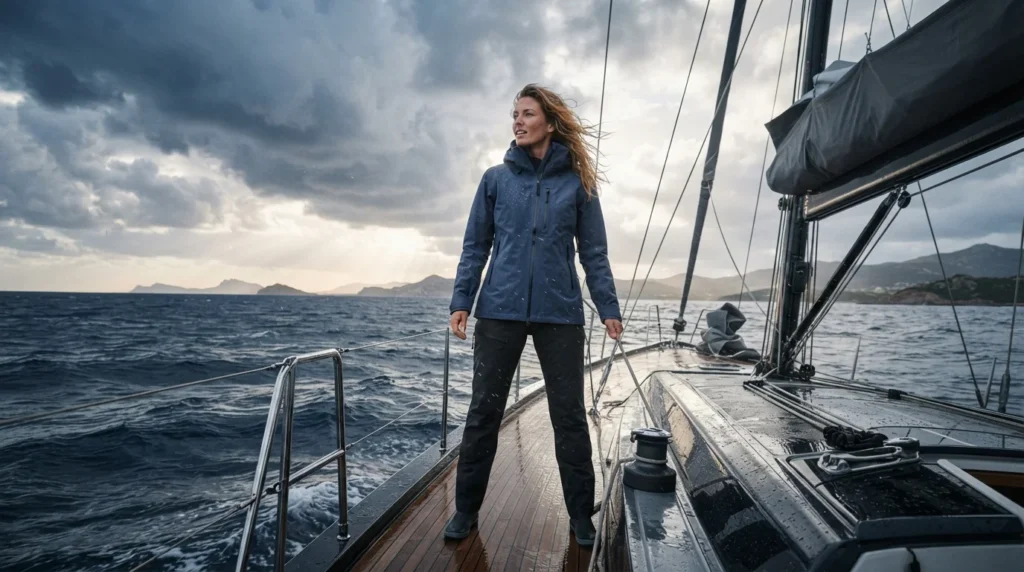
4. Waterproof Apparel for Sailing and Yachting
The marine environment presents a unique combination of challenges.
Even on a relatively warm day, wind and saltwater can make conditions feel noticeably colder. Sudden weather shifts can also expose you to rain and stronger winds with very little warning.
Therefore, waterproof sailing apparel must prioritize protection while maintaining breathability and freedom of movement.
A practical clothing system for sailing may include:
- Technical moisture-wicking base layer
- Lightweight fleece or insulating mid layer
- Waterproof sailing jacket
- Waterproof or water-repellent sailing trousers
- Technical socks
- Appropriate sailing footwear
- Sun protection for warmer conditions
The exact combination should always be adapted to the season, expected weather conditions, and the type of sailing activity.
5. Waterproof Clothing Beyond the Water
The same technical principles that make waterproof clothing useful at sea apply equally to hiking, mountaineering, traveling, and everyday outdoor activities.
A lightweight waterproof jacket can easily become an essential part of a travel wardrobe, especially when visiting destinations where weather conditions shift rapidly.
Modern outdoor apparel increasingly blends technical performance with contemporary design, allowing garments to transition effortlessly from the trail to daily life.
This makes investing in versatile technical wear especially worthwhile for anyone seeking high performance without sacrificing style.
6. Choosing Waterproof Apparel for Different Conditions
Not all waterproof garments are designed for the same environment.
Before choosing a jacket or a technical shell, consider how and where you plan to use it.
Light Rain and Everyday Use
For occasional showers and urban environments, a lightweight water-resistant or waterproof jacket may be enough.
In this case, the emphasis can be on low weight, packability, and everyday comfort.
Hiking and Outdoor Activities
For hiking and more intense use, breathability becomes even more critical.
You may also want to look for additional features such as adjustable hoods, ventilation pit zips, an ergonomic build, and reinforced wear areas.
Sailing and Yachting
Sailing places a heavier emphasis on protection against wind, rain, and saltwater.
A specialized sailing shell must offer reliable waterproofing, effective wind protection, durable construction, and adequate mobility for moving around a boat.
7. How to Care for Your Waterproof Apparel
Even high-quality technical garments require proper care to maintain their performance.
Incorrect washing or the use of unsuitable products can negatively impact technical fabrics and their water-repellent properties.
Follow the Manufacturer's Instructions
Always check the care label before washing.
Different waterproof membranes and fabric constructions may require different washing and drying methods.
Avoid Fabric Softeners
Fabric softeners can impair the performance of technical fabrics and generally should be avoided unless specifically recommended by the manufacturer.
Using a specialized detergent formulated for technical apparel is often a better choice.
Maintain the DWR (Durable Water Repellent) Finish
Many waterproof garments feature an exterior Durable Water Repellent (DWR) finish.
Over time, repeated use, washing, and exposure to dirt can reduce its effectiveness. When necessary, the DWR treatment can be refreshed using a suitable product recommended for the specific garment.
It is important to understand that DWR is different from the waterproof membrane itself. Its primary purpose is to help water bead up and roll off the outer surface of the fabric.
Rinse After Exposure to Saltwater
If your clothing is frequently exposed to the sea, do not allow salt residue to accumulate.
Rinsing garments according to the manufacturer's care instructions helps remove salt and other residues, contributing to the long-term preservation of the fabric and hardware.
8. Waterproof Apparel and Style: High Performance Doesn't Have to Look Technical
Technical apparel has evolved significantly.
Today, waterproof jackets and outdoor garments are no longer limited to bulky, aggressively technical aesthetics. Modern manufacturing techniques allow brands to combine high-performance fabrics with clean lines and a more refined look.
This creates garments that easily adapt to diverse environments.
A technical jacket can be worn on a sailing trip, a weekend getaway, or even as part of an everyday urban outfit.
The result is a more versatile approach to outdoor wear: high performance without compromising style.
9. What Makes a High-Quality Waterproof Jacket?
When comparing waterproof jackets, do not focus on a single technical spec.
Instead, evaluate the garment as a complete system.
Consider:
- Waterproofing
- Breathability
- Seam construction
- Hood design
- Cuffs and closures
- Zipper quality
- Fabric durability
- Weight
- Packability
- Freedom of movement
- Intended environment
- Fit and overall design
A jacket designed for casual city use will have very different priorities from a technical shell intended for offshore sailing.
The best choice, therefore, is not necessarily the jacket with the highest technical specs, but the one that best suits your actual needs.
Proper Protection Begins with the Right Choice
Whether you are sailing across the Argolic Gulf, exploring mountain trails, or simply preparing for unpredictable weather, the right waterproof apparel can vastly improve your outdoor experience.
Modern technical clothing combines waterproofing, breathability, durability, and comfort, while contemporary design makes combining performance and personal style easier than ever.
The key is to look beyond the label and understand how fabric, construction, and the layering system work together.
Because when the weather changes, proper clothing shouldn't slow you down. It should keep you moving forward.
Frequently Asked Questions
What makes a garment waterproof?
Waterproof clothing uses fabrics, membranes, and construction techniques designed to prevent water penetration into the garment. Taped seams, closures, and zippers also play a major role in overall protection.
What is a good waterproof rating for outdoor clothing?
Waterproof ratings around 10,000 mm and above are commonly found in technical outdoor wear, with higher ratings offering extra protection in harsher conditions. However, the waterproof rating should always be evaluated alongside breathability, seam construction, and overall garment design.
Is waterproof clothing breathable?
Many modern waterproof garments are engineered to offer breathability, allowing sweat vapor to escape while restricting water penetration from the outside. Breathability varies depending on the fabric and garment construction.
What is the best layering system for sailing?
The three-layer system is a versatile approach: a moisture-wicking base layer, an insulating mid layer, and a waterproof, windproof outer shell. The exact combination should be adjusted to weather conditions and activity level.
How should I wash waterproof clothes?
Always follow the manufacturer's care instructions. In general, avoid fabric softeners and use technical garment detergents where recommended. Proper care helps preserve the garment's waterproofing and breathability.
What is DWR?
DWR stands for Durable Water Repellent. It is an exterior treatment that helps water bead up and roll off the fabric's surface. It is not the same as a waterproof membrane and may need replenishment over time.
Is waterproof clothing suitable for everyday wear?
Absolutely. Many modern waterproof jackets combine technical performance with minimalist, contemporary designs, making them well-suited for both urban daily wear and outdoor adventures.