
Table of Contents
Waterproof vs. Windproof Jackets: What Are the Differences?
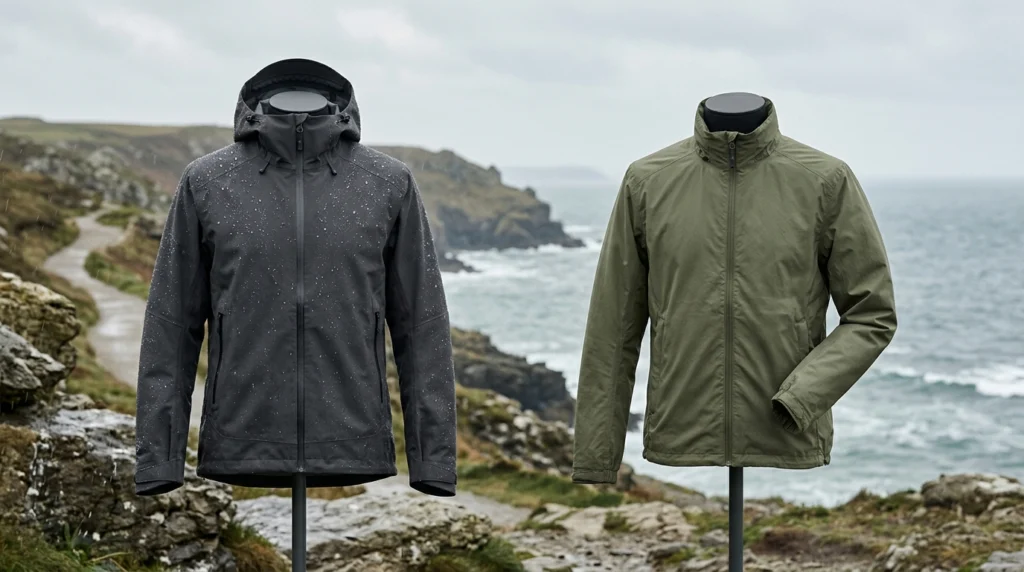
Waterproof or windproof jacket? Your choice depends on weather conditions, your activity, and the level of protection you need. Although both types of jackets often look similar on the outside, they feature different technical specifications and serve distinct purposes.
The fundamental difference is that a waterproof jacket protects against rain, whereas a windproof jacket (or windbreaker) is engineered primarily to block wind penetration. While a waterproof jacket usually offers wind protection as well, a windproof jacket is not necessarily waterproof.
In the guide below, you will discover their key differences, the essential features to look for, and which jacket best suits daily wear, outdoor activities, and sailing.
What Is a Waterproof Jacket?
A waterproof jacket is a garment engineered to prevent water penetration, protecting the wearer from rain and damp conditions.
Depending on its construction, it may feature specialized membranes, protective coatings, and fully sealed seams.
Key Features to Consider:
- Waterproofing: High protection against water penetration.
- Wind Protection: Blocks wind passage.
- Breathability: Allows sweat moisture vapour to escape from the inside.
- Sealed/Taped Seams: Prevents water from leaking through fabric stitching.
- Ergonomic Design: Functional hood, adjustable cuffs, and a fit tailored for active movement.
When Do You Need a Waterproof Jacket?
A waterproof jacket is essential when there is a risk of heavy or prolonged rainfall.
It is the practical choice for hiking, traveling, daily commutes, and marine activities.
In sailing, your choice must also account for exposure to salt spray, ocean winds, and the unique demands of life on deck.
What Is a Windproof Jacket?
A windproof jacket (windbreaker) is designed to restrict wind from passing through the fabric.
Many windbreakers feature lightweight construction, making them easy to pack and ideal for daily activities.
Main Advantages:
- Effective wind protection
- Lightweight build
- Compact and easy to carry
- Comfort and ease of movement, depending on the fit
- Ideal for layering over other garments
Some windbreakers also feature a water-repellent finish (DWR), but this does not mean they can protect against heavy rain.
When Is a Windbreaker the Better Choice?
A windproof jacket is a great option for windy days without significant rainfall.
It can be worn for walks, day trips, travel, mild outdoor activities, and casual daily commutes.
It is also very practical for seaside walks when you need protection from coastal breezes without needing heavy rain gear.
Waterproof vs. Windproof Jackets: Comparison Table
| Feature | Waterproof Jacket | Windproof Jacket |
|---|---|---|
| Rain Protection | Yes (depending on specs) | Usually limited |
| Wind Protection | Usually yes | Yes |
| Weight | Varies by construction | Typically lightweight |
| Breathability | Depends on the membrane/fabric | Depends on the membrane/fabric |
| Heavy Rainfall | Suitable (with proper specs) | Generally unsuitable |
| Everyday Wear | Yes | Yes |
| Outdoor Activities | Primarily in wet conditions | Primarily in windy conditions |
Which one should you choose? If you frequently encounter rain, opt for a waterproof jacket. If you simply need lightweight protection against breezes and wind, a windbreaker will serve your needs better.
Discover Technical Apparel Options at Markelle
Making the right choice starts with understanding the technical features of each garment.
At Markelle you can explore a wide range of clothing options designed for everyday wear, outdoor adventures, and life at sea.
Waterproof, Water-Resistant, Water-Repellent, and Windproof: What's the Difference?
The terms waterproof, water-resistant, water-repellent, and windproof are frequently used in technical outerwear descriptions, but they do not mean the same thing.
Waterproof
Refers to the ability of a fabric or garment to prevent water penetration under specified pressure and test conditions.
A jacket's overall performance depends not only on the outer fabric, but also on taped seams, water-resistant zips, and overall construction.
Water-Resistant
Provides a basic level of protection against light moisture, but is not designed to withstand heavy or prolonged rainfall.
Water-Repellent
Describes a surface fabric treatment (such as DWR) that causes water droplets to bead up and roll off the surface.
A water-repellent finish alone does not make a jacket fully waterproof.
Windproof
Refers to a material's capability to block wind penetration. It does not automatically imply rain protection.
How Important Is Breathability in a Jacket?
Breathability is crucial when using your jacket for hiking, sailing, or any physical activity involving movement.
During physical exertion, your body generates heat and sweat. A fabric with adequate breathability allows internal moisture vapour to escape to the outside environment.
True comfort also depends on ambient temperature, humidity, ventilation zips, and the base/mid-layers worn underneath.
For this reason, waterproofing alone is not enough; breathability and a proper fit significantly impact your overall comfort.
What Is GORE-TEX and How Does It Relate to Waterproof Jackets?
GORE-TEX is a family of technology membranes used in technical fabrics and outerwear.
Certain GORE-TEX constructions combine durable waterproof protection, windproof performance, and high breathability.
However, not all products featuring GORE-TEX technology share identical specifications. It is always important to review the specific product's technical ratings.
For activities in unpredictable weather, a technical jacket with a waterproof and breathable construction offers substantial advantages.
Waterproof or Windproof Jacket for Sailing and Yachting?
Out on the water, choosing the right attire requires special attention.
Wind, ocean spray, and sudden weather shifts create demanding conditions that call for reliable protection.
For short outings in mild weather: A lightweight windbreaker can be a practical, comfortable choice.
In heavy rain, strong winds, or frequent water contact: Specialized waterproof sailing gear is essential.
Key Considerations When Choosing Marine Outerwear:
- Waterproof rating
- Wind protection level
- Adjustable hood fit
- Adjustable wrist cuffs
- Material durability and abrasion resistance
- Freedom of movement
- Suitability for your specific style of sailing
For example, gear required for a quick coastal trip differs significantly from what is needed during long offshore passages in severe weather.
Read also: Sailing & Yachting Apparel: The Ultimate Buyer's Guide
Interested in Sailing Apparel?
Selecting the right gear depends on your activities and personal requirements.
Explore Markelle's available options and get in touch with us for product-specific details.
How to Choose the Right Jacket
Before deciding which jacket you need, consider the following criteria:
1. Weather Conditions
For frequent rainfall, prioritize waterproofing.
For windy but mostly dry days, a windbreaker is sufficient.
2. Type of Activity
Daily commutes, hiking, and sailing demand different performance features.
Choose a jacket built for your real-world usage.
3. Breathability and Comfort
If you plan on active movement, check the breathability ratings and ventilation options (e.g., pit zips).
4. Fit and Freedom of Movement
Your jacket should allow comfortable movement without restricting you.
If you plan to layer up underneath, factor in extra room.
5. Build Quality
Inspect the seams, zips, hood design, and technical specs.
Superior construction directly impacts protection and garment longevity.
Frequently Asked Questions
Is a windbreaker jacket waterproof?
Not necessarily. A windbreaker may offer light water resistance, but it does not feature a fully waterproof construction or sealed seams.
Does a waterproof jacket also protect against wind?
Usually, yes. Most waterproof jackets feature membranes or coatings that naturally block wind penetration as well.
Which jacket is better for hiking?
If there is any chance of rain, a breathable waterproof jacket is recommended. For mild, dry, and windy conditions, a lightweight windbreaker is often more comfortable and packable.
Is a waterproof jacket essential for sailing?
It depends on weather conditions and the nature of your trip. If you anticipate exposure to rain, sea spray, and winds, proper waterproof marine apparel is essential.
What is the difference between waterproof and water-resistant?
Waterproof indicates a higher tier of protection engineered to block water ingress under measured pressure, whereas water-resistant offers basic protection against light moisture or short drizzles.
Where can I find outdoor and yachting jackets?
You can explore Markelle's curated collections, examine detailed product specs, and submit an inquiry via our contact form.
Find the Right Jacket at Markelle
Choosing between a waterproof and a windproof jacket is about more than style—it comes down to environmental conditions, comfort, and the exact level of protection you require.
Χαρακτηριστικά όπως η αδιαβροχοποίηση, η διαπνοή, η αντιανεμική προστασία και η τεχνική κατασκευή παίζουν καθοριστικό ρόλο στην απόδοσή του.
At Markelle μπορείτε να ανακαλύψετε επιλογές ένδυσης για outdoor δραστηριότητες, ιστιοπλοΐα και καθημερινή χρήση ενώ θα έχετε τη δυνατότητα να λάβετε την κατάλληλη ενημέρωση και καθοδήγηση σχετικά με την τεχνολογία, τα τεχνικά χαρακτηριστικά και τις ιδιότητες κάθε προϊόντος.
Επιλέξτε τον κατάλληλο ρουχισμό για τις δραστηριότητές σας Γιατί το κατάλληλο ρούχο δεν είναι απλώς θέμα εμφάνισης, αλλά κυρίως σωστής επιλογής τεχνικών χαρακτηριστικών που ανταποκρίνονται στις δικές σας ανάγκες.